







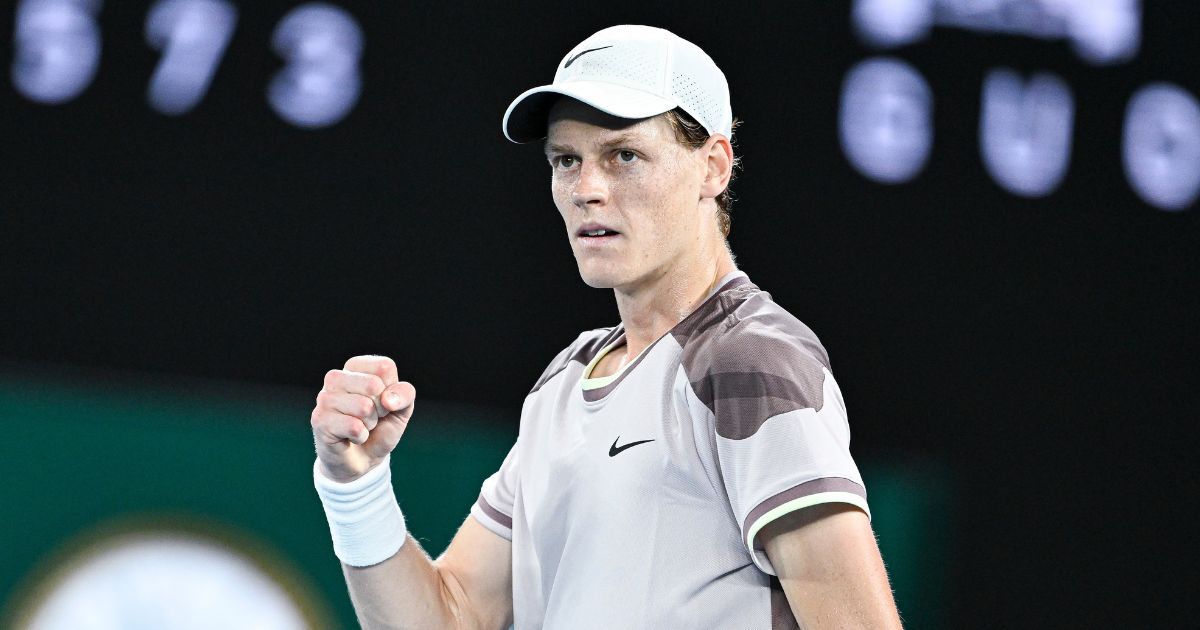
The meteoric rise of tennis icon Jannik Sinner is a perfect example of mastering a focused and positive mindset to achieve results.
The 23-year-old became the first Italian to win a Wimbledon men’s singles title following his momentous victory over reigning champion Carlos Alcaraz of Spain on 13th July 2025. Netting the £3 million prize money to add to his reported £19 million fortune, according to Forbes, Sinner admits victory requires constant work. Over four gripping sets, he solidified his place as the world’s number one player, demonstrating the quiet mental strength that has become his trademark. His demeanour has earned comparisons with legends like Rafael Nadal and Novak Djokovic.
Beyond the headlines, Sinner has proved he can sharpen his focus, make sound decisions and perform consistently under pressure. His disciplined mindset offers a compelling framework to enhance concentration, resilience and decision making across a wider scope of business environments.
Mental toughness in the spotlight
Sinner’s Wimbledon victory capped a turbulent year that included a five-set French Open loss to Alcaraz and a three-month suspension that interrupted his momentum. However, he returned stronger, more composed and more focused. In an emotional post-match speech, he alluded to mental struggles off the court, stating, “Only me – and the people who are close to me – know exactly what we have been through. It has been everything except easy.”
This kind of mental resilience, staying composed through setbacks and pressure, is essential in both sports and another area of high stress; the workplace. According to a Harvard Business Review study, 95% of professionals report feeling overwhelmed at some point by their job, yet only 25% have a strategy for managing stress effectively. Sinner’s success demonstrates that developing mental strength isn’t about being immune to challenges, but is more about preparing for and recovering from adversity with focus and composure.
The power of preparation
At the core of Sinner’s excellence lies a meticulous and consistent training routine. He commits to rigorous strength and cardio workouts designed to optimise his endurance and agility. Equally crucial is his recovery strategy: sleep, nutrition, physiotherapy and mental recalibration are treated with the same importance as on-court drills. This level of preparation mirrors what high-performing professionals must do when preparing for major work events such as presentations, launching a new product, or navigating critical decisions. No matter what your field, peak performance is built during quiet hours of practice and planning.
Just as Sinner structures his training for gradual and sustainable improvement, professionals should establish daily routines that reinforce positivity. This should include eliminating distractions and managing energy across the day. A structured approach to preparation is especially relevant for those working in flexible serviced offices or hybrid environments, where managing your own rhythm and workspace is critical to success.
Adaptability as a competitive edge
Sinner’s transformation on grass courts is a testament to his adaptability. Originally considered a hard-court specialist, he struggled early in his career on the unpredictable surface of Wimbledon. However, through relentless analysis and targeted practice, he learned how to play with lower bounces and faster rallies, ultimately mastering the surface well enough to dethrone the defending champion.
His suspension earlier in 2025 could have derailed his career. Instead, it rather became a catalyst for growth. He took time to reflect, refine his strategy, and return to competition with renewed intensity. This flexible mindset is critical for navigating business landscapes where change is constant. Today’s professionals face rapid technological shifts, market uncertainties and evolving customer demands. Like Sinner, embracing change, rather than resisting it, allows us to adapt quickly, pivot when necessary, and view setbacks as opportunities to learn.
Research from McKinsey indicates companies that prioritise adaptability are 3.6 times more likely to outperform their peers in volatile environments. On a personal level, adaptability fuels innovation and builds career longevity.
Mindfulness and self-awareness
Perhaps the most intriguing aspect of Sinner’s mental regime is his use of advanced mindfulness techniques, including mental training programmes developed for Formula 1 drivers. These routines are designed to enhance focus, reduce stress under pressure and promote emotional self-regulation, which means having the ability to manage and respond to your own emotions in a healthy and adaptive way.
In a world filled with distractions such as emails, messages, notifications, meetings and multitasking, professionals are increasingly struggling to maintain focus. According to a University of California study, it takes around 23 minutes to regain focus after one single interruption. Mindfulness practices such as daily meditation, breathing work, or even mindful walking have been scientifically proven to improve concentration, reduce anxiety and enhance decision making capabilities.
Sinner’s example suggests that building self-awareness, such as realising when you’re mentally fatigued and understanding your emotional triggers, can help professionals to make clearer, more strategic decisions. For executives making high-stakes decisions, mindfulness can be a useful performance tool.
Turning off distractions
In interviews, Sinner often emphasises how he “switches off” distractions when he steps onto the court. This ability to immerse himself in the moment is what allows him to deliver under pressure, even when external noise such as criticism, expectations, or controversy is loud. His comment, “Matches are won with the head,” captures the essence of mental focus providing a decisive competitive edge.
In the professional world, the ability to prioritise important or urgent tasks, and to filter out background noise, is increasingly valuable. American author and Georgetown University professor Cal Newport discusses the capacity for intense, focused effort in his book, Deep Work, describing it as one of the most “prized skills” a person can possess. BE Offices has evolved to support this work ethic, with our serviced offices offering quiet zones, wellness amenities and ergonomic designs that reduce cognitive load. These environments, combined with mindful practices and structured routines, can significantly improve productivity and creativity.
Lessons from the court in decision making
In tennis, every point is a decision. Sinner must assess his opponent’s position, anticipate their response and choose the best shot, all within a fraction of a second. His decision making is not reactive, but is informed by hours of analysis, strategic thinking and situational awareness. Leaders face similar demands, albeit on a longer timeline. Sound decision making in business requires clarity, data, intuition and a calm mindset. Drawing from Sinner’s approach, professionals can improve their skills by preparing thoroughly, understanding their parameters and staying mentally clear, even when under stress.
A study by PWC in 2024 revealed 61% of executives struggled with decision making because of information overload and a lack of clarity. Incorporating habits that enhance mental clarity such as journal writing, one-on-one coaching and digital detoxes can sharpen your instincts and lead to better outcomes.
Blueprint for focus and growth
Jannik Sinner’s 2025 Wimbledon victory is more than a sporting triumph: it’s a masterclass in focus, resilience, preparation and adaptability. His journey from teenage prodigy to world number one provides a living example of what it takes to excel in a high-pressure, high-performance environment. Professionals studying how to stay focused at work can draw deeply from his playbook. Create consistent wellbeing routines, embrace setbacks as growth opportunities and practice mindfulness to enhance clarity. Prepare meticulously, adapt continually and, above all, remember that peak performance, whether on Centre Court or in the boardroom, is built on the strength of the mind.
In a world where distractions are constant and change is relentless; focus is the ultimate advantage. Sinner’s story reminds us that with the right mindset, we can achieve excellence consistently.
© Victor Velter / Shutterstock.com